
Your cart is currently empty!

A few Minutes with Craig Mellick
 We recently caught up with Craig Mellick the Principal Materials Technologist from BG&E Materials Technology to have a chat about the recent projects being undertaken across the globe.
 The 2016 conference will address the many diverse aspects of concrete technology including materials, sustainability, techniques, research and development, design, practice and economics. Papers will be drawn from all over the world bringing together many disciplines, reflecting concrete’s importance, versatility and adaptability.
 Every year, the Concrete Institute of Australia recognizes outstanding achievements in concrete structures and concrete technology with the presentation of their Awards for Excellence in Concrete. There are various categories for which the awards are presented, including Project, Technology, International and Sustainability. These categories are further divided into Building and Engineering projects within each state.
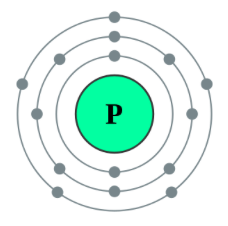 “Phosphorus can be extracted in viable quantities from fly ash. Sufficient phosphorus could be recovered from the country’s incinerators to meet 30 percent of the Swedish annual demand for mineral fertilisers, say the researchers.”
 We were lucky enough to have an Australian win the award for “Most Outstanding Student Oral presentation" at WOCA 2015. Ali Kiani, from the University of Newcastle Callaghan, NSW presented on Upgrading of Cenospheres in Fly Ash using as series of Inverted Reflux Classifiers.
 Coal Ash Asia 2015 (CAA2015) will be held in Beijing, China from the 20th to the 24th of September. There is one month left for early bird registration, which provides a 25% discount on the comprehensive attendance package.
 Dubai has taken another step to reducing their environmental footprint by announcing a switch to Green Concrete that includes a mix of 66% by-product (minimum), such as fly ash (FA).
 We want your feedback, thoughts and ideas about Coal Ash Matters and how we can improve it for you in the future to further promote the use of coal combustion products in Australia. Results from this short five minute survey will be published in a coming edition of Coal Ash Matters.
 In 2015, the CRC for Low Carbon Living continues to forge ahead with its innovative research on geopolymer concrete as one of the most promising high volume applications of fly ash. Another project submitted to the CRC-LCL in 2014 aimed to gather field data from geopolymer real-life constructions to develop greater confidence in geopolymer use. Using the field and laboratory data, a comprehensive Handbook for geopolymer specification will be developed and published through Standards Australia.
 With the Olympics just around the corner the developers for the Rio De Janeiro, Brazil Olympics are facing the task of completing the 34 venues and stadiums spread across the city by 2016. In 2013 the United Nations Environment Programme (UNEP) agreed that the construction of the new venues needed to include by-products such as fly ash and achieve 100% local sustainability targets.
 New regulation focuses on a range of measures to strengthen environmental controls which are designed to ensure a level playing field for industry and breaks the business model of rogue operators in NSW. Protection of the Environment Operations (Waste) Regulation 2014, which came into effect in November 2014, has required some changes to the existing Coal Ash Exemption for coal combustion products (CCPs) used in NSW.
 The Omega Bridge is over 340 metres long and is the lynchpin for the $329 million Princess Highway upgrade. The Bridge was constructed using the same method as the Sea Cliff Bridge construction in 2005. Fly ash was crucial to the completion of the project.